AI Canvas
Welcome to AI Canvas 🎨
In the world of data analysis, we often face such dilemmas: data is scattered across various systems, and each analysis requires repeating the same process. Valuable analytical insights fade away with the end of a project. The birth of AI Canvas aims to break these constraints.
AskTable AI Canvas is an immersive AI data analysis platform that seamlessly integrates free canvas creation, intelligent multi-source connectivity, and a reusable template system. It transforms data analysis from "repetitive work" into "knowledge accumulation," and from "individual skills" to "team assets."
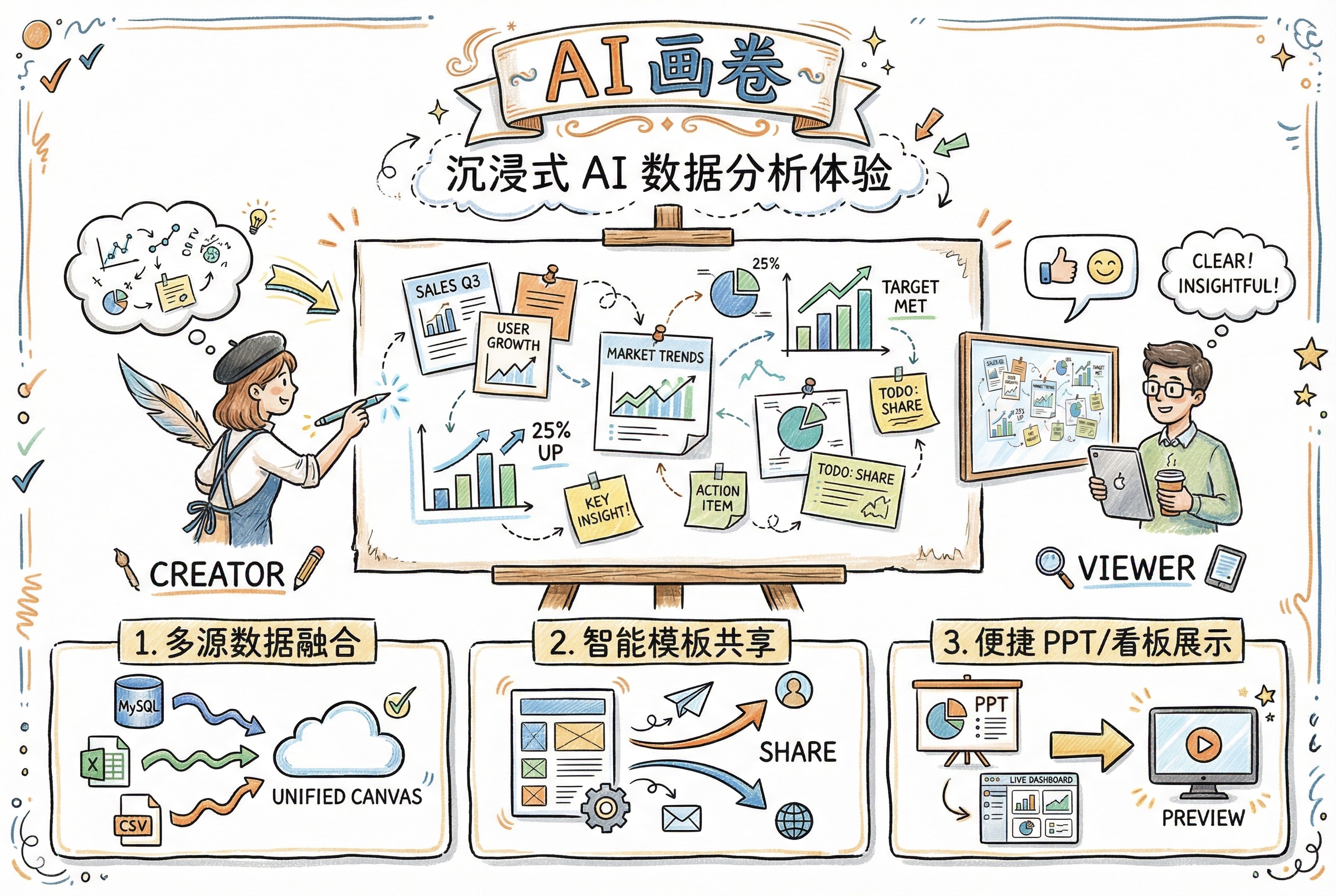
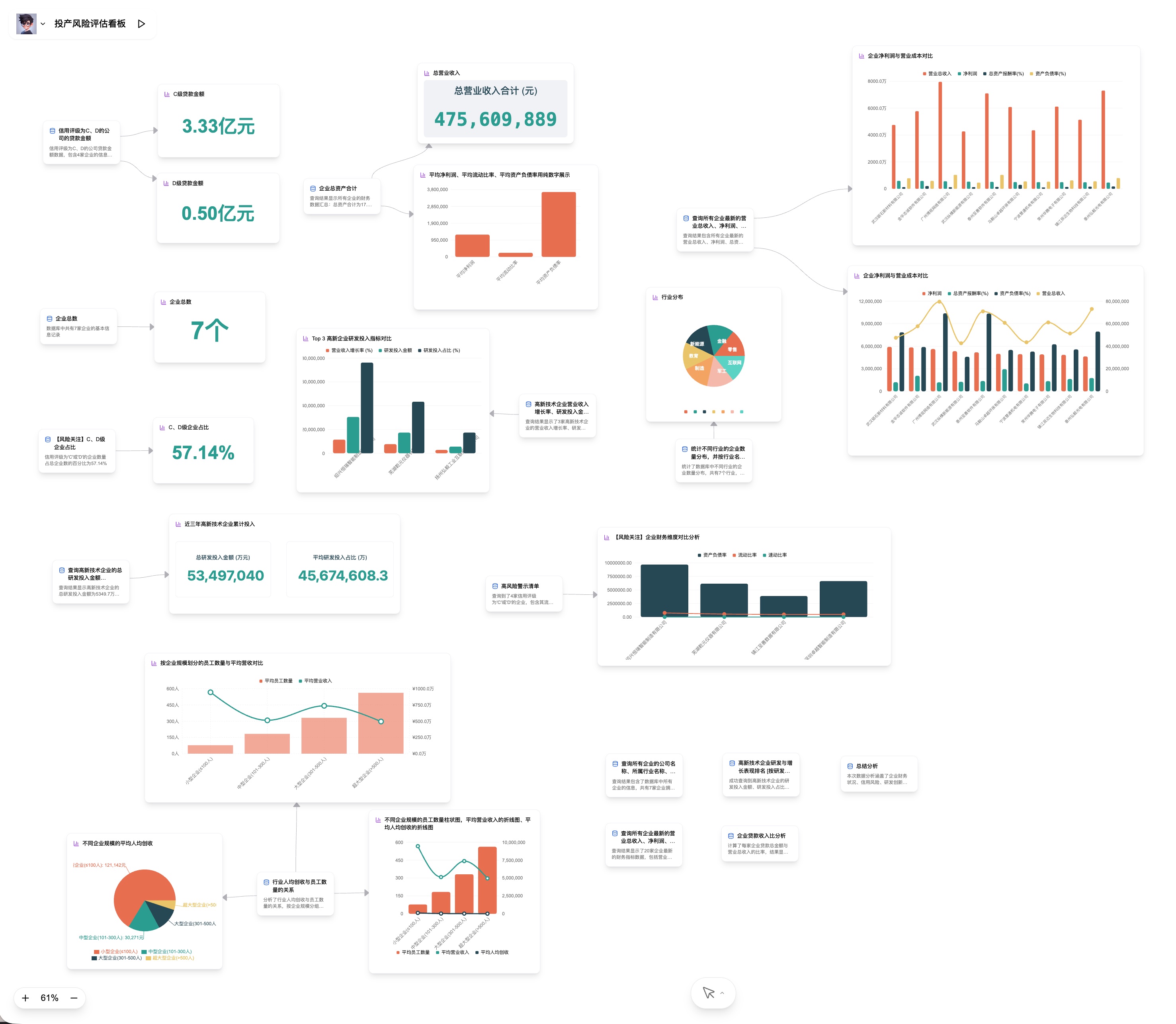
The Problems We Solve
The Challenge of Data Silos
Modern enterprise data resides in various databases like MySQL, PostgreSQL, ClickHouse, as well as Excel and CSV files. The traditional approach is to build a data warehouse through complex ETL processes to consolidate data. However, this leads to new problems:
- Poor Timeliness: ETL scheduling causes data to always be "yesterday's news"
- High Maintenance Costs: Changes in data sources require modifications to ETL processes
- Lack of Flexibility: Temporary analysis requests are difficult to respond to quickly
- Excessive Solutions: Lightweight cross-data source analysis doesn't need a data warehouse but lacks alternatives
The Cycle of Repetitive Work
Each analysis project starts from scratch:
- The same query logic needs to be rewritten repeatedly
- Similar charts need to be reconfigured
- Same analytical ideas cannot be reused
- Team members work independently without collaboration
The Barrier of Technical Expertise
Traditional BI tools are powerful but have steep learning curves:
- Writing SQL requires professional skills
- Chart configuration is complex and tedious
- Data processing requires programming knowledge
- Business users struggle to complete analysis independently
Product Philosophy: A Shift from Tool to Platform
Why Choose a Canvas?
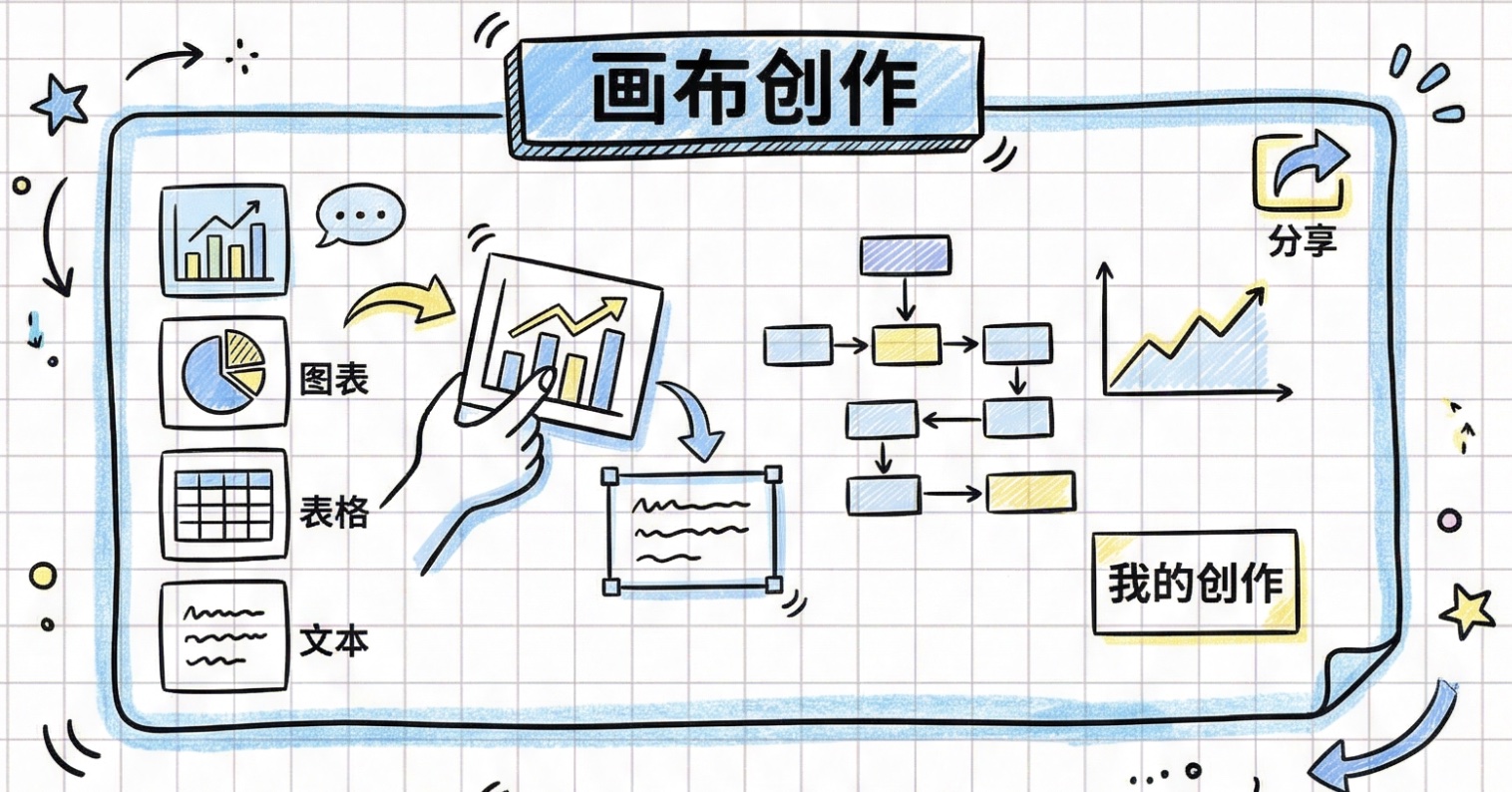
The canvas represents freedom and creativity. We observed that the thinking process of data analysts is inherently nonlinear—they need to view multiple data views simultaneously, establish connections between different charts, and quickly try various visualization options.
Traditional fixed layouts limit this creativity. AI Canvas uses an infinite canvas design, allowing analysts to:
- Freely arrange: Place components at will to build their own analysis narrative
- Organize spatially: Express the hierarchy of analysis logic through two-dimensional space
- Visualize thoughts: Organize data insights like mind maps
This design philosophy stems from our belief: Good analysis is not just data presentation, but also expression of thought.
Why Directly Connect to Data Sources?
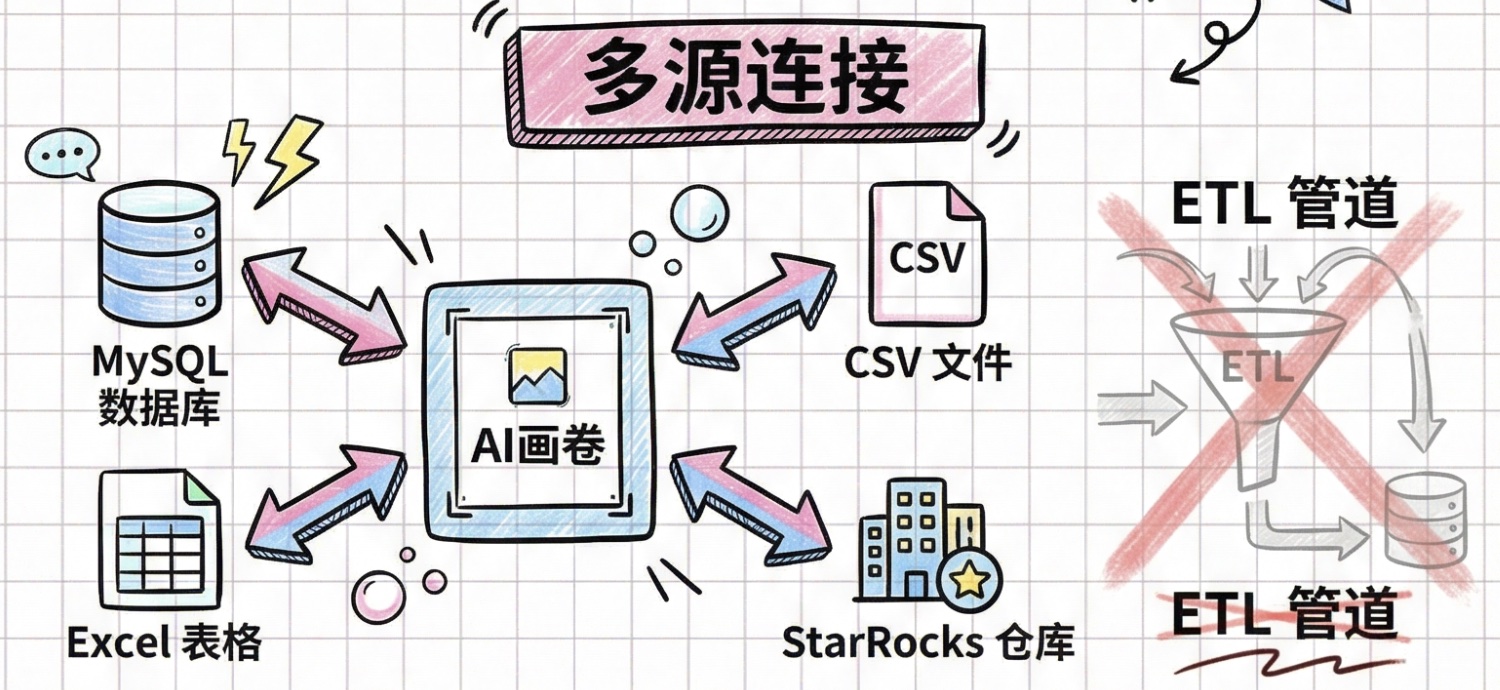
We challenge the conventional notion that a data warehouse must be built. Through real-time multi-source connection technology, AI Canvas allows you to:
- Skip ETL: Pull the latest data directly from source systems
- Mixed queries: Use multiple data sources on one canvas
- Flexible exploration: No need to wait for data engineers to configure new data pipelines
The underlying thinking is: The essence of data analysis is exploration, and exploration requires immediate feedback. When you can immediately validate assumptions and rapidly iterate your analysis, innovation naturally occurs.
Why Emphasize Templates?
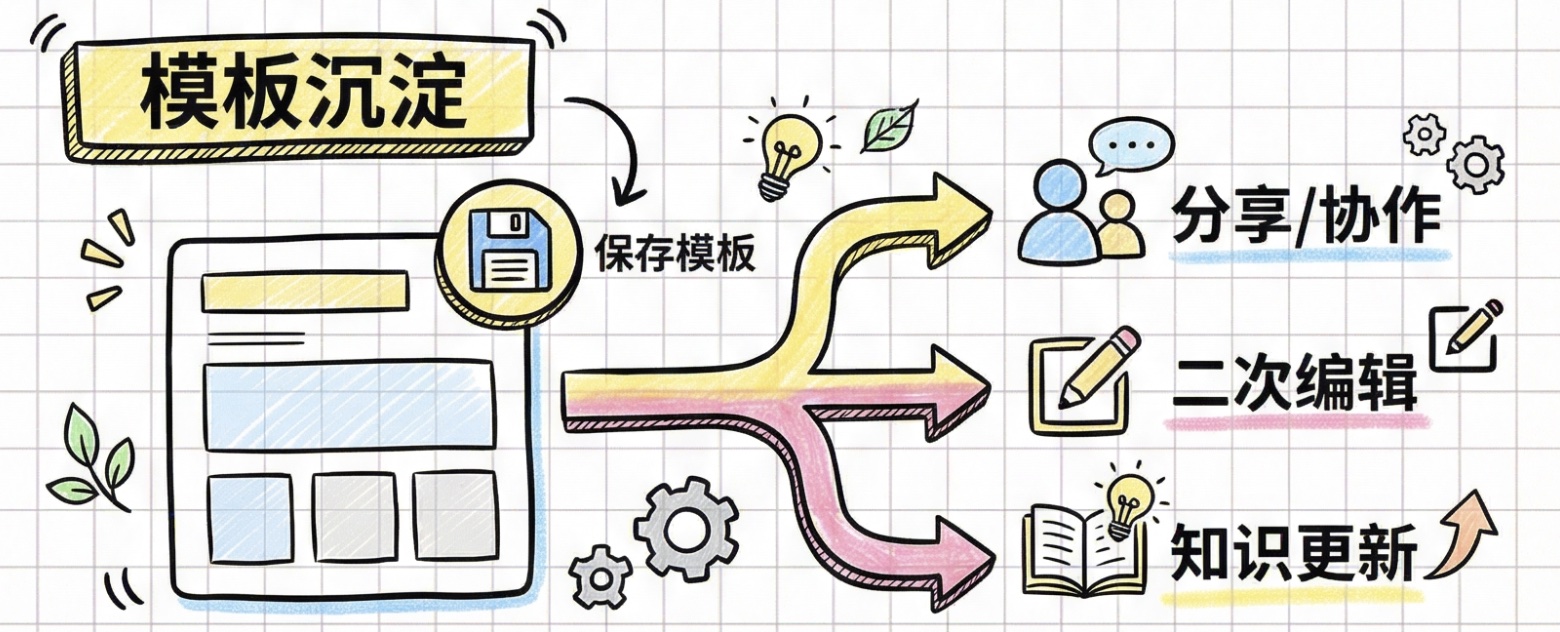
Templates are not restrictions, but crystallizations of knowledge. Every deep data analysis contains business understanding, analytical methods, and technical implementation. In traditional approaches, this valuable knowledge often disappears with the end of a project.
The template system of AI Canvas achieves:
- Fixed Ideas: Accumulate excellent analytical methodologies into reusable templates
- Quick Start: New projects start by modifying templates, not from scratch
- Team Collaboration: Best practices naturally spread within the team
- Continuous Evolution: Templates evolve and optimize with business development
This reflects our core philosophy: Data analysis capabilities should be accumulative and transferable organizational assets.
The Role of AI
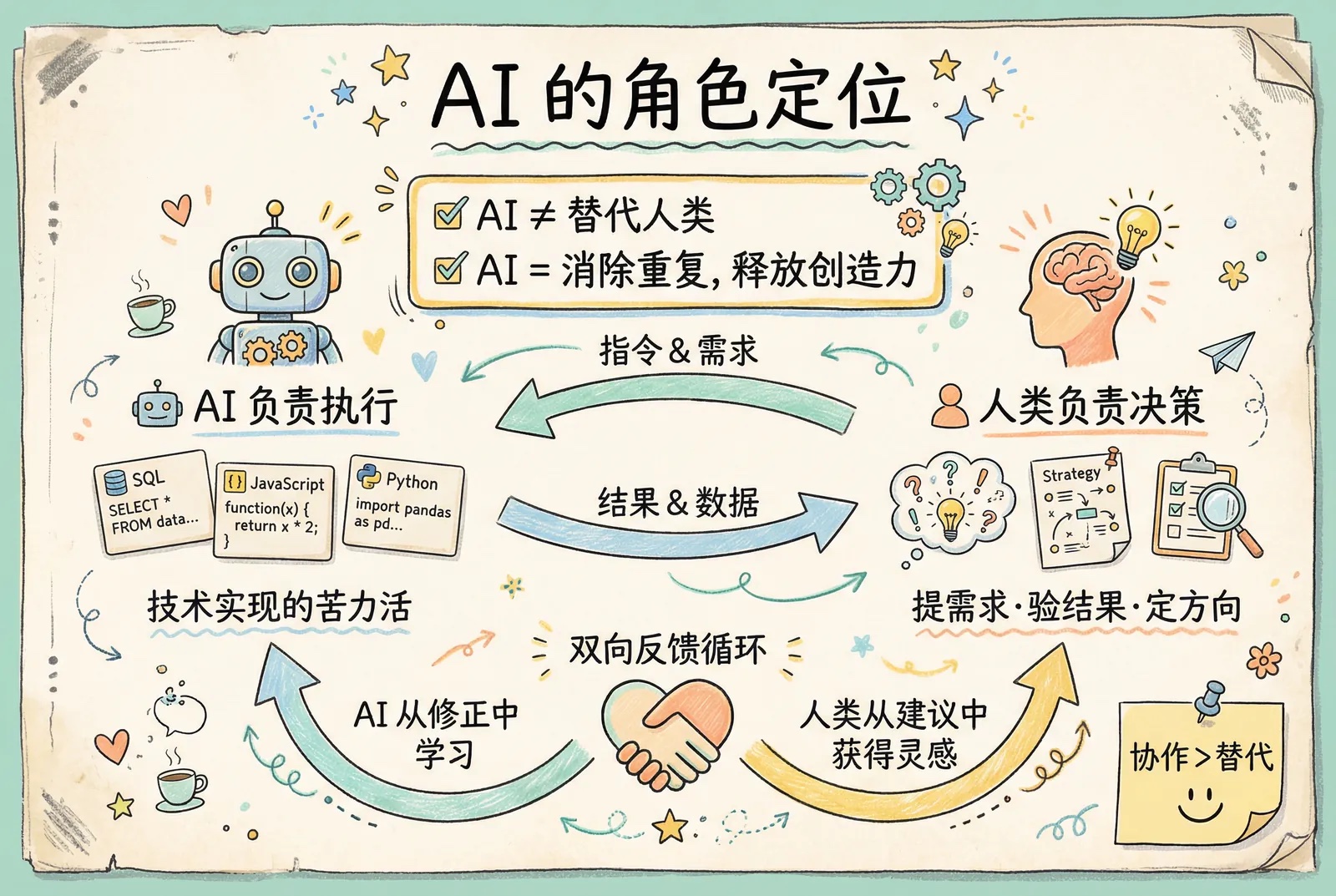
We don't believe AI will replace data analysts. The value of AI lies in eliminating repetitive tasks and letting humans focus on creative thinking.
The AI capabilities of AI Canvas follow the principle of "human-machine collaboration":
- AI handles execution: Generate SQL, JavaScript, Python code
- Humans handle decisions: Propose requirements, verify results, optimize directions
- Two-way feedback: AI learns from human corrections, and humans gain inspiration from AI suggestions
Core Capabilities Explained
Canvas Creation: An Analytical Space for Free Expression
What it is
AI Canvas provides an infinitely extendable two-dimensional canvas where you can freely add, move, and organize various analytical components: data tables, charts, text explanations, images, etc.
Why it's important
Data analysis is not a linear report generation, but an exploratory thought process. The canvas gives you:
- Spatial freedom: Unrestricted by templates, driven by creativity
- Associative expression: Express logical associations through positional relationships
- Iterative friendliness: Easily adjust layouts and quickly try different presentations
Typical use cases
- Exploratory analysis: Explore multiple analytical directions simultaneously on the canvas and compare different hypotheses
- Analysis presentation: Export the canvas as a PPT to report insights to management
- Collaboration dashboard: Team members jointly build an analytical dashboard on the canvas
Multi-source Connection: Breaking Data Silos
Technological Innovation
AI Canvas supports direct connection to various data sources without data migration:
- Relational Databases: MySQL, PostgreSQL, SQL Server, Oracle, etc.
- Big Data Platforms: ClickHouse, StarRocks, Doris, etc.
- Local Files: Excel, CSV, etc.
More importantly, you can use different data sources on the same canvas, and AI will intelligently handle data integration.
Business Value
This capability goes beyond the technological aspect:
- Real-time: Always use the latest data, eliminating the problem of "data delay"
- Flexibility: Temporary analysis needs no longer require "processes"
- Cost Savings: Reduce the cost of building and maintaining data warehouses
- Risk Control: Keep data in its original system, meeting security and compliance requirements
Template Accumulation: Letting Knowledge Flow
Philosophy of Knowledge Management
Each template is a "methodology" encapsulation of analysis:
- Data Connection Configuration: Predefined data source connections
- Query Logic: Verified SQL query templates
- Visualization Schemes: Carefully designed charts and layouts
- Analysis Ideas: Analysis logic expressed through component arrangements
Usage Process
- Create a Template: Save an excellent canvas as a template
- Share and Spread: Share the template within the team or organization
- Quick Reuse: Create a new canvas based on the template and modify parameters to use it
- Continuous Iteration: Optimize the template based on feedback, forming best practices
Typical Applications
- Business Monitoring Templates: Daily operation indicator dashboards
- Specialized Analysis Templates: User behavior analysis, marketing effect analysis, etc.
- Industry Solution Templates: E-commerce analysis, financial risk control, industry-specific analytics
AI Intelligent Operations: Making Analysis Accessible
Querying Data: AI Generates SQL
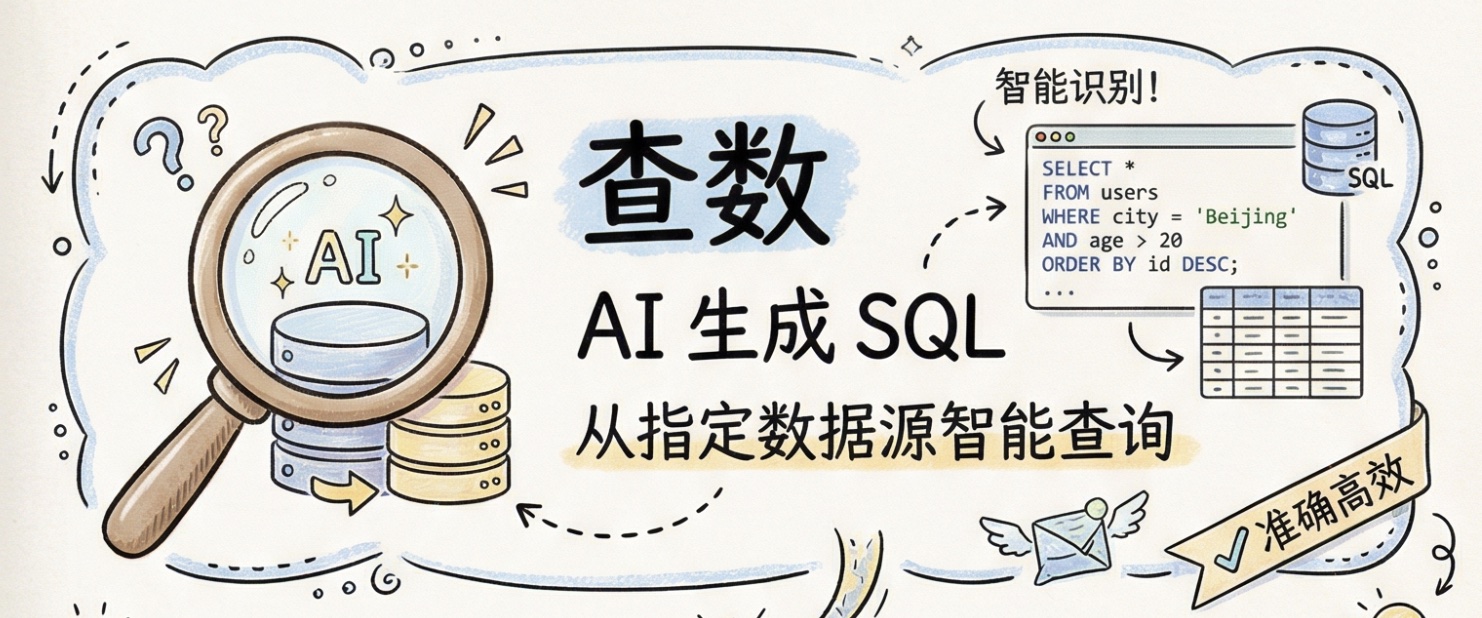
How it Works
You describe your requirements in natural language, and AI generates SQL queries accordingly:
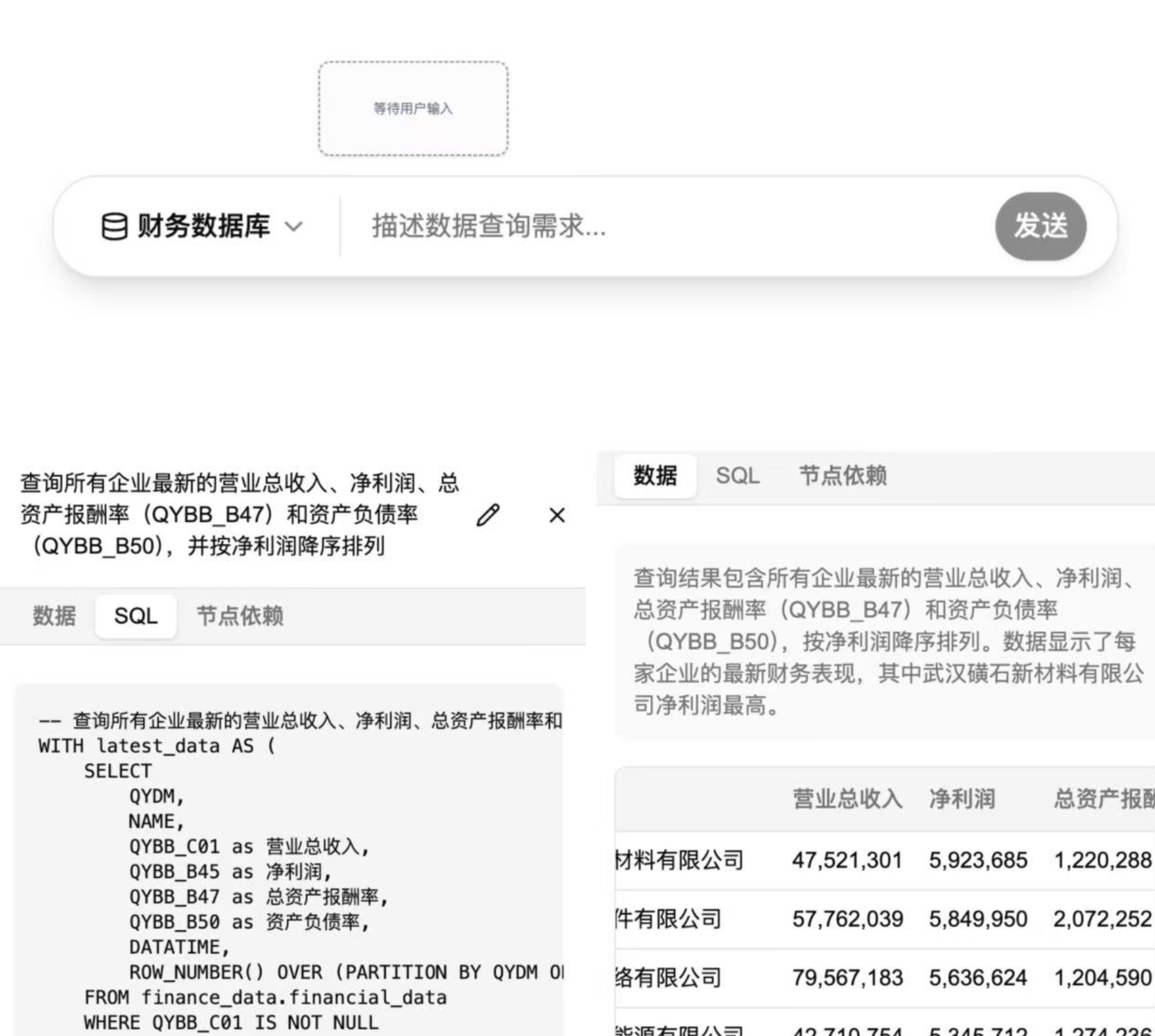
When to Use
- Quick Exploration: Uncertain about data structure, need to quickly verify ideas
- Complex Queries: Involving multi-table joins, window functions, etc.
- Learning SQL: Learn best practices through AI-generated SQL
Human-Machine Collaboration Tips
- After AI generates SQL, you can still manually edit and optimize it
- Provide clear context information to help AI understand your needs
- Verify the results and adjust prompts if necessary to regenerate
Generating Charts: AI Generates JavaScript
Source of Flexibility
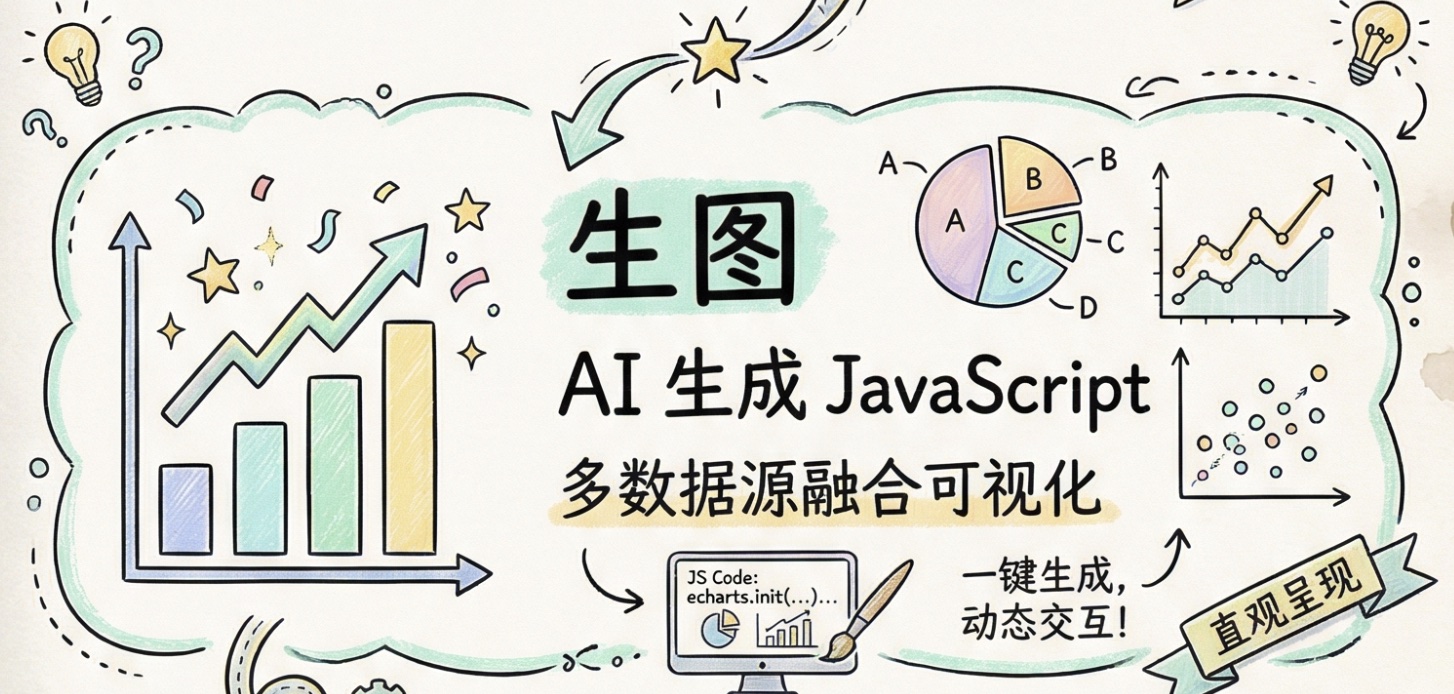
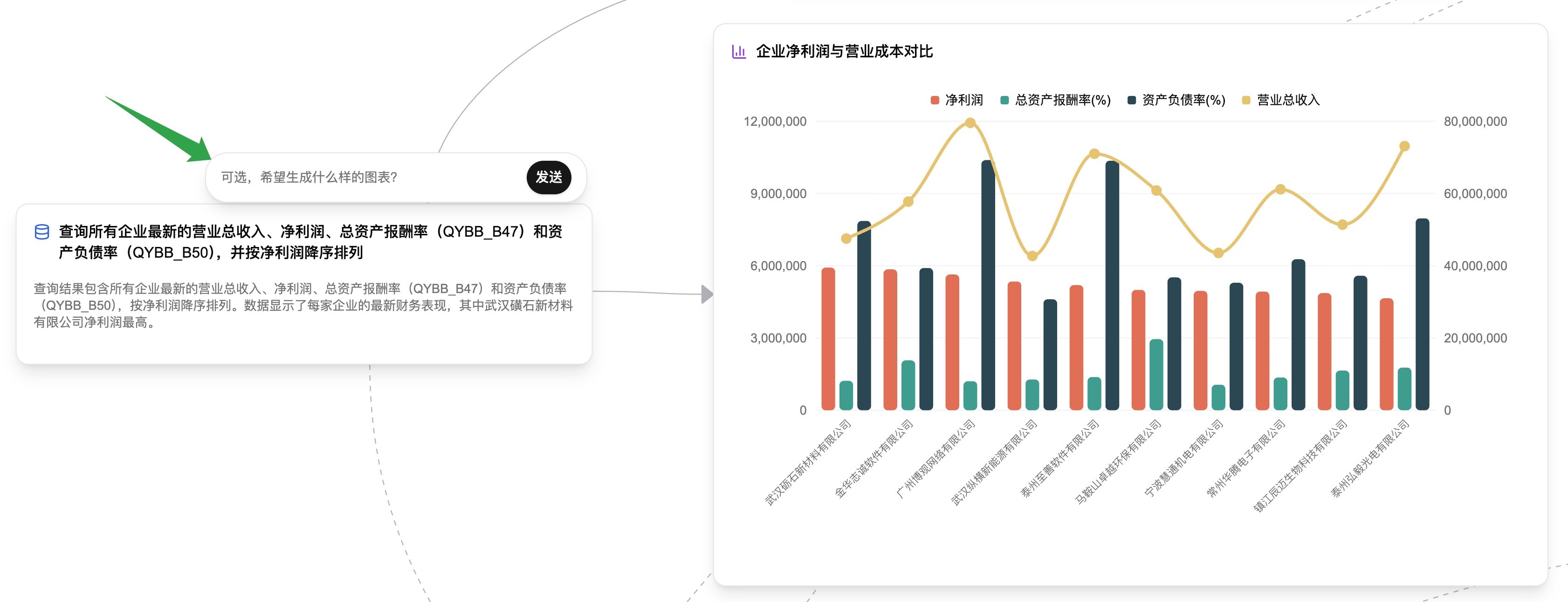
Unlike traditional BI tools with predefined chart types, AI Canvas creates charts by generating JavaScript code. This means:
- Endless Possibilities: Not limited by chart libraries, any visualization can be achieved
- Deep Customization: Precisely control every visual element of the chart
- Multi-source Integration: Easily combine data from different data sources
Working Method
Usage Suggestions
- Start Simple: First describe in natural language, let AI generate basic charts
- Gradually Optimize: Make minor adjustments to the generated code and add personalized elements
- Save as Template: Save satisfactory visualizations for reuse next time
Data Processing: AI Generates Python
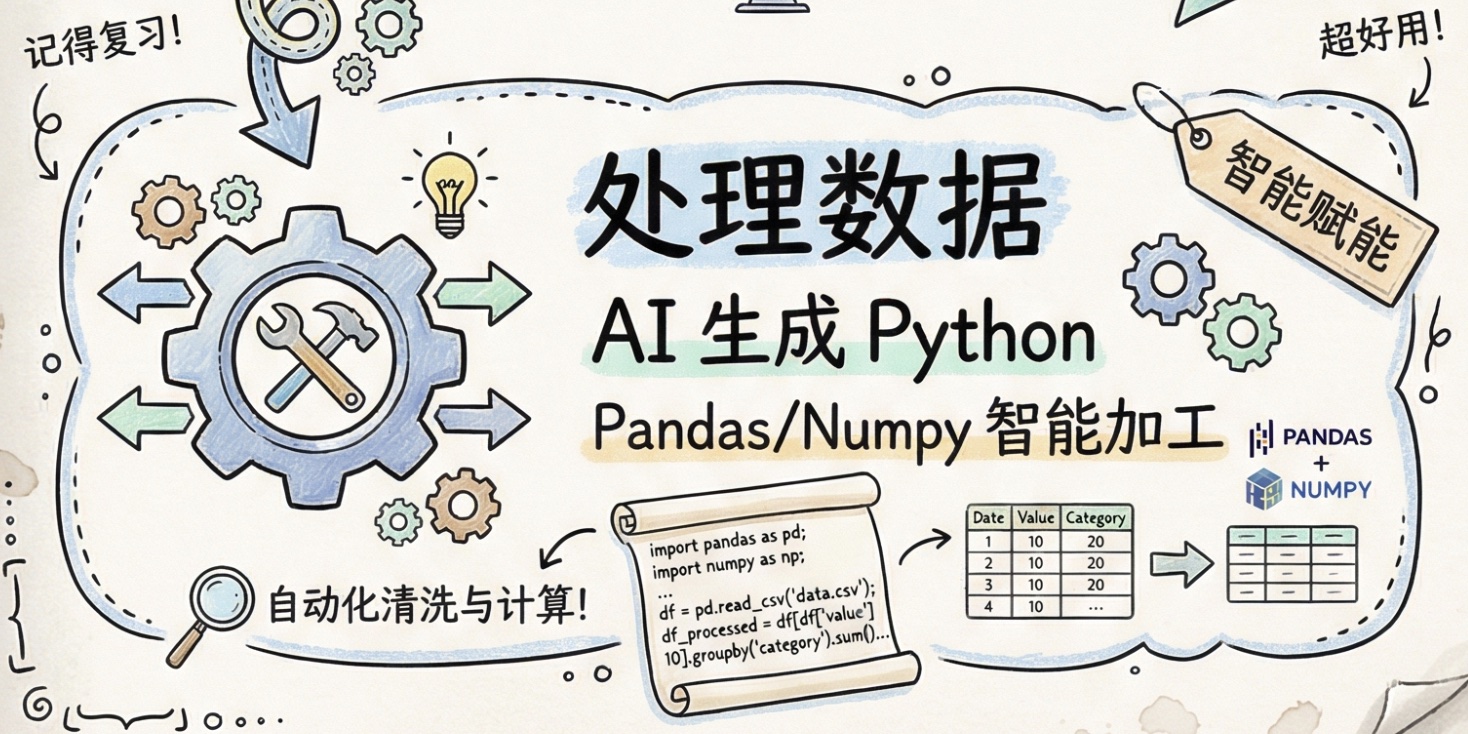
New Way of Data Transformation
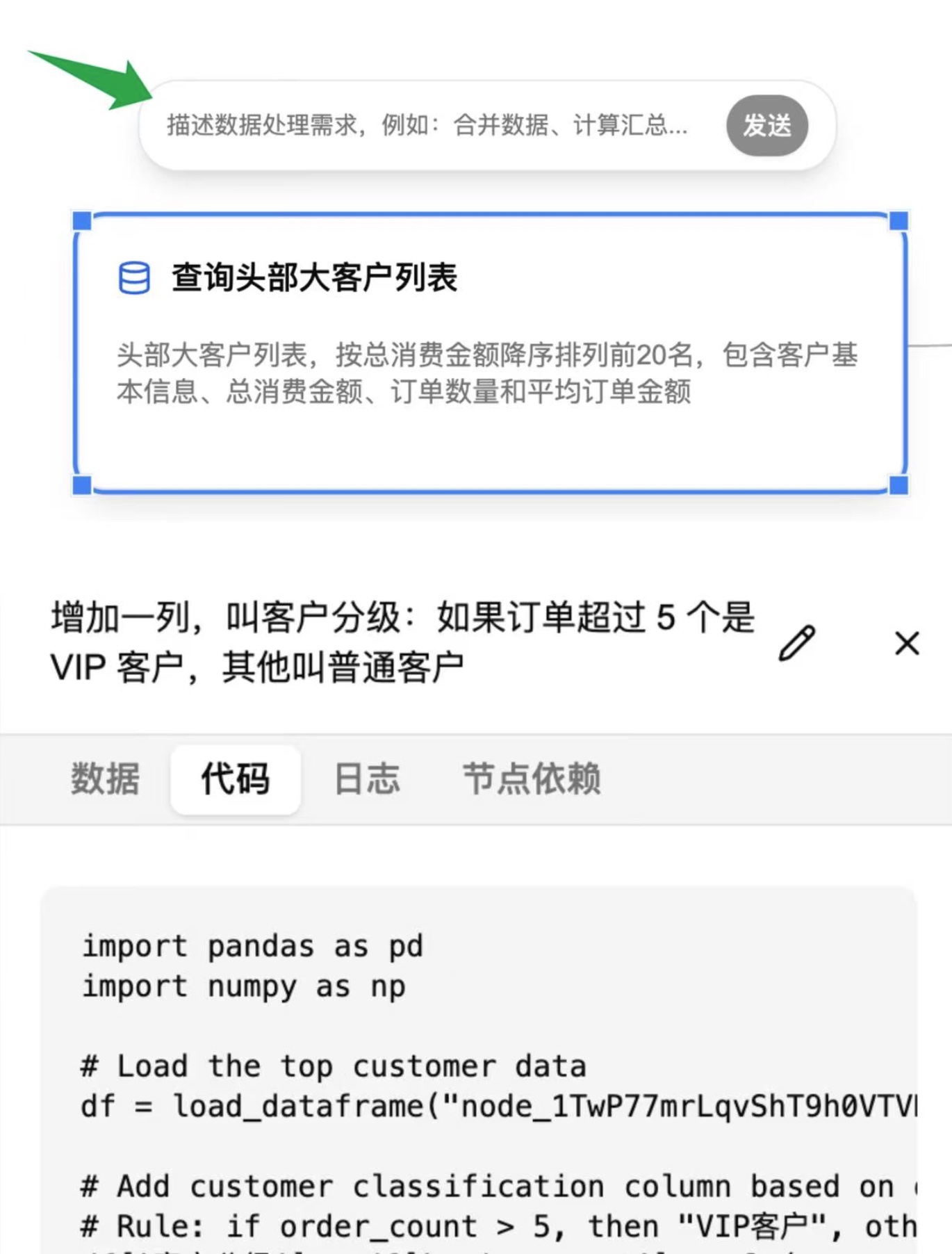
When you need to clean, calculate, or transform data, tell AI your needs:
Technical Capabilities
- Pandas Operations: Data cleaning, aggregation, pivot tables, etc.
- NumPy Calculations: Statistical analysis, mathematical operations
- Custom Logic: Implementing complex business rules
Applicable Scenarios
- Data Preprocessing: Standardization, normalization, handling missing values
- Feature Engineering: Creating derived metrics, user segmentation
- Complex Calculations: Year-over-year, month-over-month, moving averages, trend forecasting
Supported Data Sources
AI Canvas fully leverages the database question-answering capabilities of the AI engine and already supports over 20 types of data sources, including the following databases (data warehouses):
Relational Databases
- MySQL / MariaDB
- PostgreSQL
- SQL Server
- Oracle
- ...
Big Data / OLAP
- ClickHouse
- Apache Doris
- StarRocks
- ...
Files / Others
- Excel (.xlsx, .xls)
- CSV
Who Should Use AI Canvas?
Data Analysts
Value Proposition: Free up time from SQL writing and chart configuration, focusing on insight discovery and value creation
- Quickly respond to ad-hoc analysis requests from business departments
- Build reusable analytical templates to improve efficiency
- Focus on analytical ideas, letting AI handle technical details
Business Analysts
Value Proposition: Perform data analysis independently without deep technical background
- Query data using natural language, no need to learn SQL
- Quickly generate business reports based on existing templates
- Solidify business insights into shareable canvases
Data Team Managers
Value Proposition: Build a team's analytical knowledge base and accumulate organizational capabilities
- Turn team best practices into templates
- Reduce training costs for new members
- Improve the team's overall analysis efficiency and quality
Product Managers
Value Proposition: Drive product decisions with data, without relying on data team schedules
- Monitor key product metrics in real-time
- Quickly validate product assumptions
- Create data-driven product proposals
Getting Started with AI Canvas
Typical Workflow
1. Create a Canvas
- Start from a blank canvas
2. AI Query Data
-
Select a database or upload an Excel file
-
Describe your needs in natural language
-
AI generates SQL and executes the query
-
Preview and verify the data
3. AI Generate Chart
-
Tell AI what kind of visualization you want
-
AI generates interactive charts
-
Adjust styles and configurations
4. Create Dashboard
-
Freely drag and drop components
-
Add text explanations
-
Build an analytical narrative
6. Share and Collaborate
-
Share the dashboard link with colleagues
-
Export as PDF, PPT
Design Principles: Our Product Philosophy
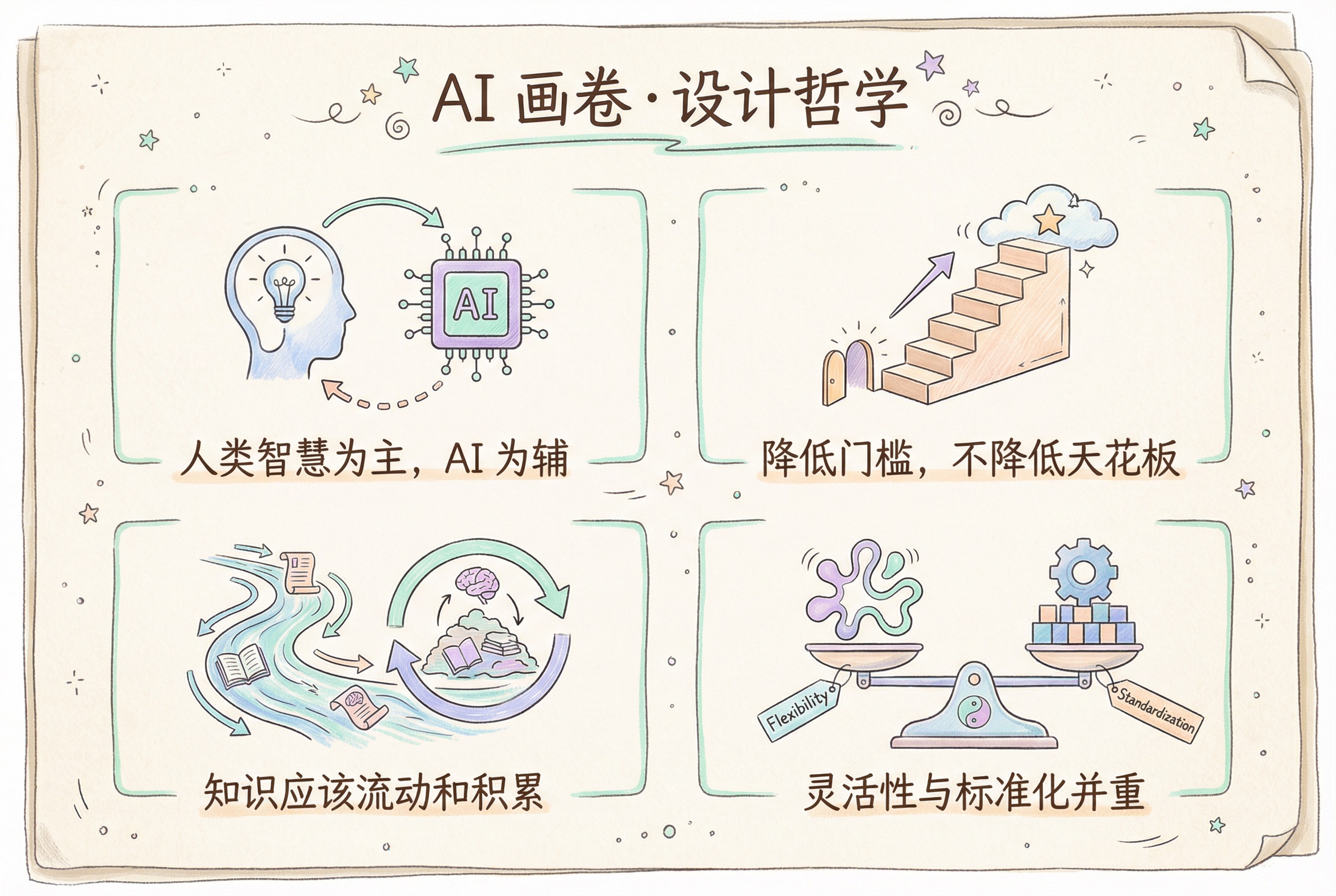
1. Human Wisdom First, AI Second
AI is a powerful assistant, but the final analytical judgment comes from humans. When we design each feature, we ensure:
- Humans maintain control over the analytical process
- AI outputs are transparent and verifiable
- Humans can intervene, correct, and optimize at any time
2. Lower the Barriers, Not the Ceiling
We hope:
- Beginners can quickly get started, completing basic analysis through natural language
- Experts can deeply customize, writing complex SQL and visualization code
- Intermediate Users can improve their skills by learning AI-generated code
3. Knowledge Should Flow and Accumulate
Analysis should not be a "one-time job," but rather:
- Be accumulated as reusable templates
- Be shared and evolved within the team
- Accumulate over time into organizational assets
4. Balance Flexibility and Standardization
We provide:
- Canvas Freedom: Unrestricted creativity
- Template Standards: Ensuring consistency in team collaboration
- AI Intelligence: Finding a balance between freedom and efficiency
Start Your AI Canvas Journey! 🚀
Whether you're an experienced data expert or a business person just starting to explore data analysis, AI Canvas will become your reliable partner. Let's together tell more compelling business stories with data.